
Yes, you can keep AI tools from colonizing your evenings, and the research-backed shortlist is short: scheduled notification windows, explicit team norms about after-hours messages, and keeping work devices out of the bedroom. One anchor figure: in Microsoft's 2022 Work Trend Index survey of about 20,000 workers across 11 countries, the company reported that a majority of workers felt pressure to be available after hours — the always-on norm that AI assistants now quietly extend. RechargeMe covers wellbeing as reported information, not medical or mental-health advice.
Every practice below is tied to a named study or institution, because wellbeing content earns trust the same way benchmark content does: sources or nothing.
Why do after-hours notifications cost more than they look?
Because anticipating them is itself a stressor. A study led by Virginia Tech's William Becker and colleagues, published in 2021 in the Academy of Management Proceedings, found that the mere expectation of monitoring work email after hours was associated with anxiety — affecting not just employees but their partners. You don't need to answer the message for it to tax you; the possibility that it might arrive keeps part of your attention at the office.
That finding reframes tool settings as boundary infrastructure. An AI assistant that summarizes your inbox at 9 p.m. is convenient, and it is also a reason to have an inbox open at 9 p.m. The study's implication runs the other way: organizations that establish explicit norms against after-hours monitoring reduce that anticipatory stress, and individuals who batch notifications approximate the same effect alone.
Which three practices do the sources actually support?
Noticed we said three, not thirty. Here is the list, each step sourced:
- Batch notifications into set windows. Constant task-switching carries a measurable cognitive cost: University of California, Irvine research led by Gloria Mark found that interrupted workers experience higher stress, measured through heart-rate variability, and that refocusing after an interruption takes measurable minutes. Turning off non-human notifications after hours — AI digests included — removes the interruption at the source.
- Make team norms explicit, not implied. Per the Becker-led 2021 findings, stated expectations about after-hours availability lower anxiety relative to unstated ones. A single written team rule — no messages answered after 6 p.m., AI-drafted or otherwise — beats a hundred personal discipline apps, because it removes the anticipation rather than the willpower.
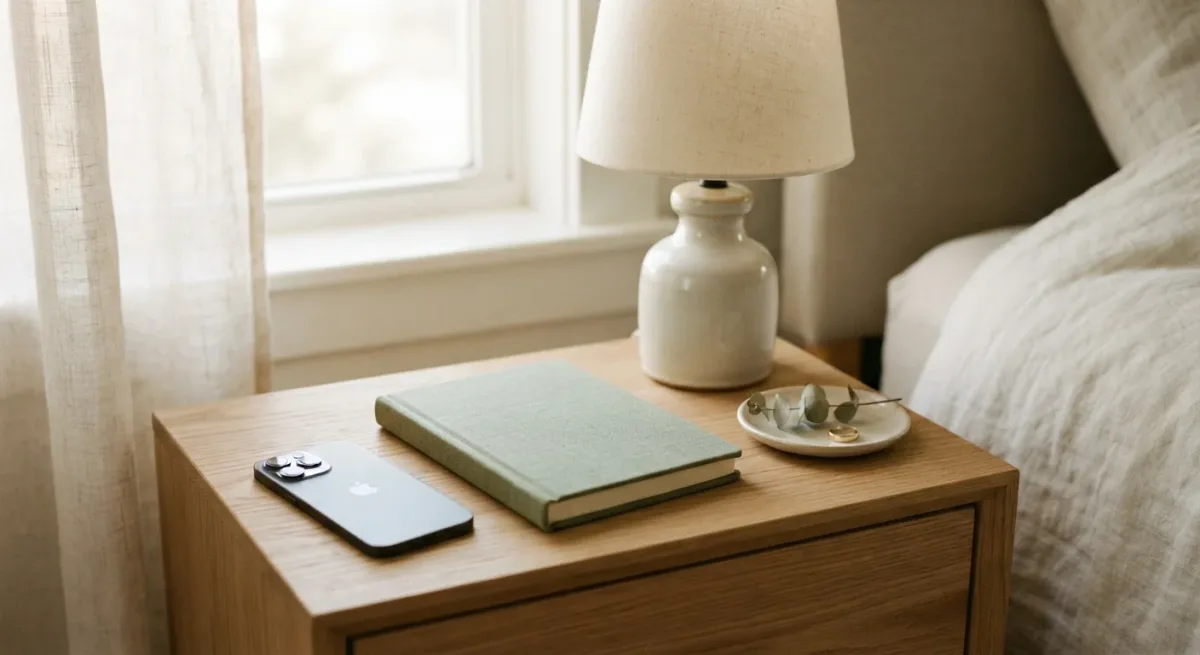
- Keep the work device out of the bedroom. Mayo Clinic guidance on healthy sleep hygiene recommends removing screens and work materials from the sleep environment. The chat window you can't see is the chat window that can't see you.
Where do AI tools specifically make this harder?
By being helpful at exactly the wrong hours. AI assistants lower the friction of doing one more work thing at night — a quick draft, a summary, one more thread — so they can inflate after-hours activity without anyone deciding to work late. Microsoft's Work Trend Index editions from 2022 through 2024 also documented what the company called productivity paranoia, with large majorities of leaders questioning productivity while most employees reported working more; always-on tooling sits inside that loop.
The honest counterweight: the same tools can compress daytime work enough to shorten evenings rather than extend them. Which way the effect runs depends on configuration, not on the model — digests scheduled for morning, drafts batched into work blocks, nothing pinging after a set hour.
What does the setup look like in practice?
A numbered configuration anyone can finish in one sitting:
- Set your AI assistant's digest or summary schedule to working hours only, per each tool's own notification settings.
- Enable do-not-disturb on work accounts from your chosen evening cutoff to morning — an operating-system setting, no extra software needed.
- Write the team norm down in one sentence and post it where the team works.
- Charge work devices outside the bedroom.
- Review the setup after two weeks and cut whatever you didn't use.
What the sources did not establish: that any of this improves health outcomes rather than reducing interruption and anxiety measures in the studied settings. The evidence supports boundaries as stress management, not as therapy. For persistent stress or sleep trouble, the appropriate source is a clinician — the Mayo Clinic's published guidance on work stress is a reasonable starting read, and it is linked below.
For more context, read Complete Guide to Comic Book Collecting for Beginners.
For more context, read How to Run a Four-Day Week Without Losing Output.
For more context, read Sleep Is the Recovery Tool With the Strongest Evidence.