The mental load is real, measurable, and unevenly distributed: in the first large US study to quantify it, published in Women's Studies International Forum in 2022, researchers Leah Ruppanner, Allison Daminger, and colleagues found that mothers performed roughly seven in ten household mental-load tasks — the behind-the-scenes cognitive work of planning, tracking, and coordinating family life — even in dual-earner couples. The term is recent; the pattern it names is not.
It explains what researchers mean by mental load, how it is measured, what links it to stress and wellbeing, and what the evidence says about reducing it. If the strain it describes feels like more than overload, a clinician can help distinguish chronic stress from depression or anxiety.
What exactly is the mental load?
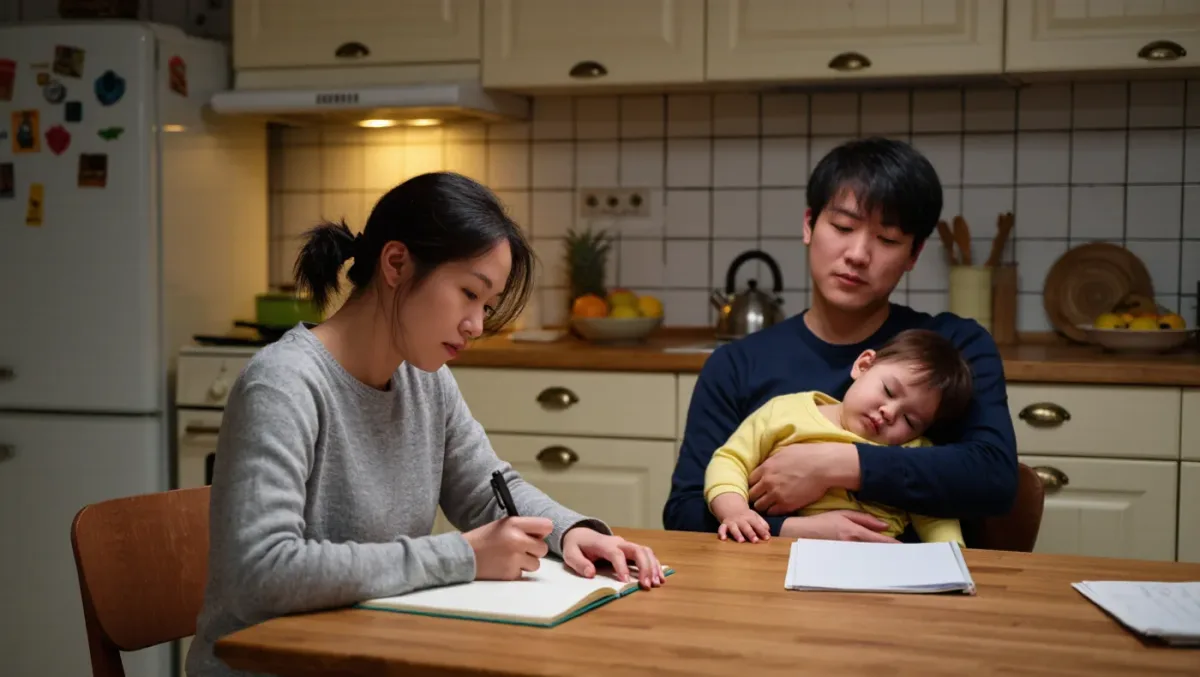
The mental load — researchers also call it cognitive labor or invisible labor — is the thinking work that household functioning depends on: noticing that the laundry detergent is running out, deciding when to schedule the pediatrician, remembering the permission slip, monitoring whether the babysitter contract needs renewal. It is distinct from doing the task; it is the work of knowing the task needs doing, and it runs continuously.
Sociologist Allison Daminger, in a 2019 study published in the Journal of Marriage and Family, broke this cognitive labor into four sequential stages: anticipating needs, identifying options, making decisions, and monitoring outcomes. In her interviews with 52 dual-earner couples, women disproportionately performed the anticipation and monitoring stages — the always-on bookends — while men's participation concentrated in discrete, completable stages such as decision-making. The always-on parts are precisely the ones hardest to see and hardest to put down.
How big is the gap, and where did the numbers come from?
The 2022 study by Ruppanner, Daminger, and colleagues surveyed thousands of US parents and found mothers carried the majority of mental-load tasks in most domains — about seven in ten overall — while couples were far more equal in physically executing chores. The gap persisted even when both partners worked full time, and even in couples who described their split as fair.
This dissociation is a repeated finding: hands can split work fifty-fifty while heads do not. Earlier qualitative work — Arlie Hochschild's concept of the "second shift" from her 1989 research, and Nancy Folbre's economic framing of care work in 2006 — described the same asymmetry before survey instruments existed to count it.
Does carrying the mental load affect health?
The wellbeing findings are emerging rather than settled, and deserve calibrated language. In the 2022 US study, mothers who carried more of the mental load reported higher stress, more time pressure, and lower relationship satisfaction; a smaller 2019 study by Susan Walzer and follow-up qualitative work has described mothers describing the load as exhausting in itself. These are cross-sectional associations — they show correlation, not proven causation — but the direction is consistent across studies.
The plausible mechanisms mirror established stress physiology: continuous vigilance interrupts recovery, fragments attention, and crowds out leisure of the kind that restores mood. It sits alongside a well-documented broader literature — per the American Psychological Association's annual Stress in America surveys, women consistently report higher stress levels than men, with parents among the most stressed groups.
Is the mental load just another word for being organized?
No, and the distinction matters for taking it seriously. Organization is a skill applied to one's own work; the mental load, as measured in these studies, is the unpaid management of other people's needs and logistics within a household. The complaint researchers document is not that women think more in general — it is that the default manager role falls to one person, unasked and unnamed, while the partner remains a helpful contractor rather than a co-manager.
That framing also explains why common responses miss. Taking out the trash when asked relocates execution; it leaves anticipation, monitoring, and remembering exactly where they were.
What does the evidence say helps?
Research here is young, so expectations should be modest. What it supports so far:
- Making the invisible visible. Couples studies, including Daminger's interview work, found that simply mapping the four stages of cognitive labor — who anticipates, who decides, who monitors, for which domains — was itself the intervention most couples had never attempted.
- Transferring ownership of domains, not tasks. The pattern that eases the load is handing over a whole domain — school logistics, meals, bills — including its thinking, which requires tolerating that it will be done differently.
- Named defaults. Households that explicitly assign standing responsibility report less friction than those relying on whoever notices first, per the 2022 survey data on how couples organize.
What the research does not yet support is any claim that one conversational technique fixes the imbalance; the 2022 authors themselves note structural contributors — workplace norms, unequal leave — that couple-level negotiation cannot reach.
When to talk to a clinician
Consider a clinician when the load tips from busy to unwell: persistent exhaustion that rest does not touch, loss of interest in things you used to enjoy, irritability that damages relationships, trouble sleeping despite opportunity, or a sense that you cannot keep functioning at this pace. These overlap with depression and anxiety, both common in mothers of young children and both treatable — and a clinician can help sort routine overload from a condition needing care. Partners reading this: the same threshold applies to them, and sharing works in both directions.
Frequently asked questions
Is the mental load a diagnosed condition? No. It is a sociological concept describing an unequal distribution of cognitive household labor, not a medical diagnosis, and no screening test exists for it. Its relevance to health comes through its measured associations with stress, time pressure, and lower satisfaction in studies such as the 2022 US survey. Persistent overload symptoms, though, are worth clinical attention in their own right.
Do same-sex couples show the same gap? Research is thinner but suggestive: some studies of same-sex parents find cognitive labor distributed more evenly, and others find that the role of household manager still concentrates in one partner, per reviews of the small literature. The consistent theme across family types is that the manager role — whoever holds it — carries the exhaustion; equality of doing does not automatically produce equality of managing.
My partner genuinely does half the chores. Why am I still exhausted? Because chores are the visible half of the work. Daminger's 2019 stage analysis found the imbalance concentrates in anticipation and monitoring — noticing, planning, remembering — which chore counts never measure. If you hold those stages for the household, you are working during rest: driving, showering, lying awake. Mapping who holds each stage is the evidence-supported starting point.