Exercise helps with many things menopause brings, but not the one most women ask about first: The Menopause Society's 2023 position statement, published in the journal Menopause, concluded that physical activity has not been shown to reduce the frequency or severity of hot flashes and night sweats, while the same document and the WHO's 2020 guidelines support exercise for improving sleep, mood, cardiometabolic health, muscle, and bone through the menopause transition.
It separates what exercise demonstrably does during menopause from what it does not, so that expectations match the evidence; decisions about symptoms and any treatment, including hormone therapy, belong with your clinician.
The menopause transition is the years-long shift in ovarian hormone production ending with menopause, defined as twelve consecutive months without a menstrual period; its average age in the US is around 51, per NIH. Declining estrogen drives the symptoms people notice — vasomotor symptoms is the umbrella term for hot flashes and night sweats — alongside changes in sleep, mood, body composition, and bone density.
Does exercise reduce hot flashes?
The evidence says no, or at least not reliably. The Menopause Society's 2023 position statement reviewed trials of exercise for vasomotor symptoms and found they did not demonstrate meaningful reductions in frequency or severity compared with control conditions. This matters because hope of dousing hot flashes is a common reason women start exercising during menopause — and an unmet expectation is a common reason they stop. Treatments with demonstrated efficacy for vasomotor symptoms, such as menopausal hormone therapy and several nonhormonal medications, are clinical decisions to discuss with a clinician.
Where exercise does have evidence is everywhere around the hot flashes. The same position statement, along with prior reviews, documents improvements in sleep quality, mood and depressive symptoms, overall quality of life, insulin sensitivity, blood pressure, and body composition with regular activity in midlife — benefits that shape daily experience even on the days a hot flash arrives anyway.
What changes in the body during the transition?
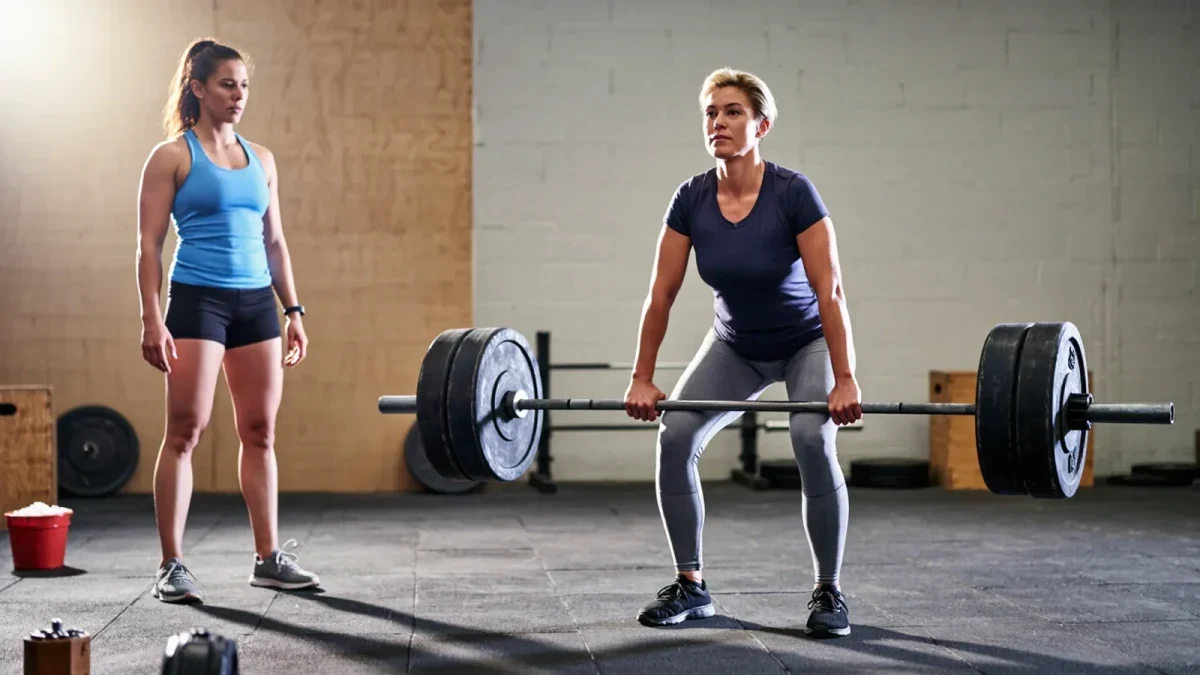
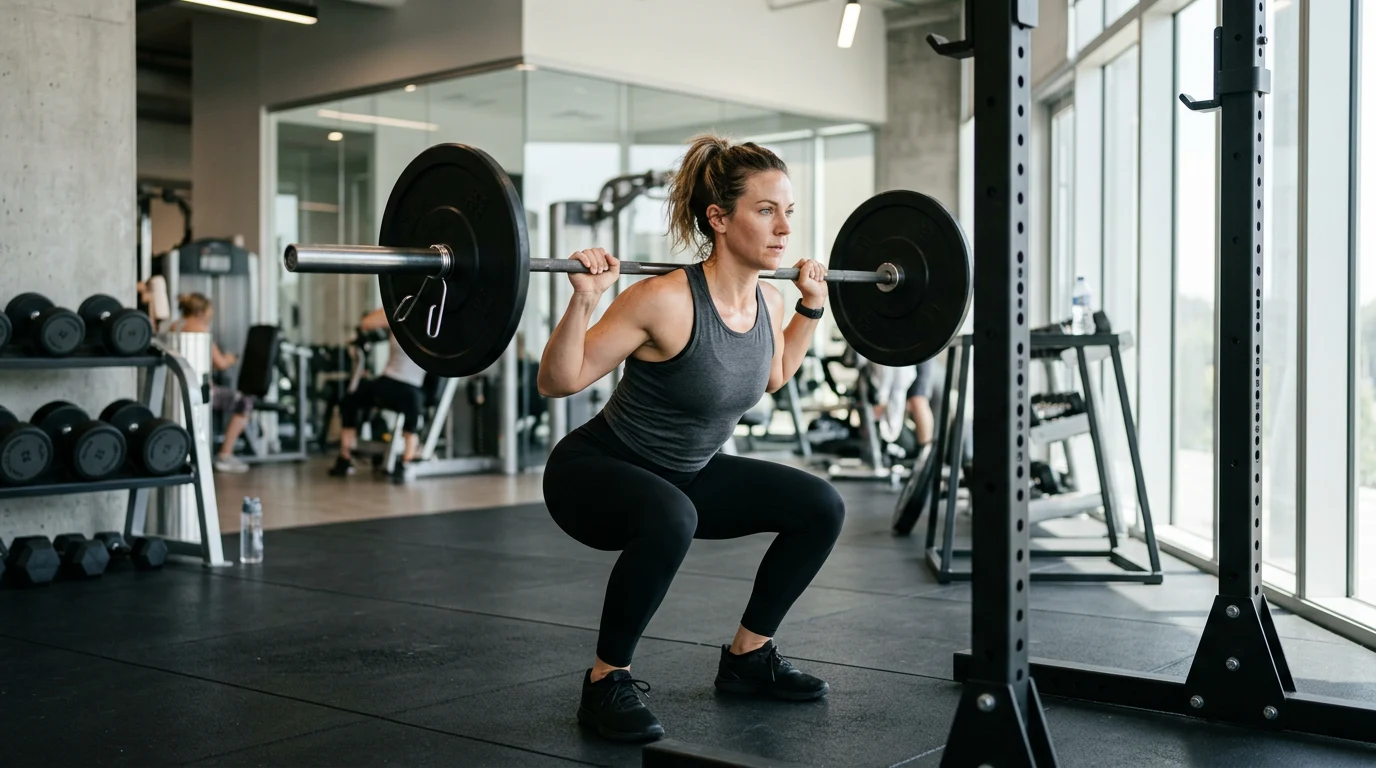
Two physical shifts make exercise more important in this window, not less. The first is muscle: the sarcopenia process — age-related loss of muscle mass and strength — accelerates in midlife, and the European consensus definition (EWGSOP2, 2019) identifies low muscle strength as the key warning sign. The second is bone: estrogen decline speeds bone loss, a major contributor to postmenopausal osteoporosis risk, per NIH. Resistance training addresses both directions — the WHO's 2020 guidelines and the HHS 2018 guidelines specify muscle-strengthening activity on at least two days a week for exactly this purpose, and the 2018 HHS document notes that muscle-strengthening activity supports bone health.
| Symptom or change | What exercise evidence shows |
|---|---|
| Hot flashes, night sweats | No demonstrated reduction (Menopause Society, 2023) |
| Sleep quality | Improvements with regular activity (Menopause Society, 2023) |
| Mood, depressive symptoms | Improvements documented across trials and reviews |
| Muscle mass and strength | Resistance training counteracts midlife loss (WHO 2020; NSCA 2019) |
| Bone density trajectory | Muscle-strengthening activity supports bone (HHS 2018) |
| Cardiometabolic risk | Aerobic activity improves blood pressure and insulin sensitivity |
What kind and how much?
The guideline dose does not change at menopause. WHO 2020 asks for 150 to 300 minutes of moderate aerobic activity weekly plus at least two days of muscle-strengthening work; the guidelines also advise limiting sedentary time, which tends to creep upward in midlife. Within that frame, the balance shifts slightly with priorities: if muscle and bone are the concerns — and in this window they usually are — the two strength days are the non-negotiable core, with aerobic minutes built around them. If sleep and mood are the front line, the aerobic component carries more of the documented benefit. No guideline ranks one priority over another, because the minimum effective answer is the same: both boxes, every week.
One honest caveat belongs here: activity levels commonly decline across the menopause transition, a pattern documented in midlife cohort research, and joint aches and poor sleep make restarting harder than it sounds. The WHO's advice for returning activity — start small, build gradually — is written for exactly this situation.
It also helps to keep the frame honest on the other side of the ledger: because exercise reliably moves sleep, mood, and metabolic markers during a transition that can otherwise feel like a slow surrender, many clinicians describe activity as the intervention patients control directly while other options are evaluated. That framing is not a promise — it is a division of labor. The training handles what training demonstrably touches; the clinician evaluates what it does not.
When to talk to a clinician
Exercise is a supporting measure in menopause, not a substitute for evaluation. See your clinician when vasomotor symptoms disrupt sleep or daily life — effective treatments exist and the choice among them, from hormone therapy to nonhormonal options, depends on your history; when periods become dramatically heavy or frequent during perimenopause; when urinary or vaginal symptoms appear, since pelvic floor physical therapy has evidence behind it; or when new joint pain changes how you move. Anyone starting vigorous exercise after inactivity, or with diagnosed heart disease or osteoporosis, should involve a clinician in the plan, per WHO 2020's advice for people with chronic conditions.
Frequently asked questions
Will strength training make me bulky at this age?
No — and the concern undersells what training does in midlife. Resistance training in postmenopausal women produces gains in strength and function with modest visible muscle change, per the NSCA's 2019 position statement on older adults; the hormonal environment of menopause works against rapid muscle gain. What the training reliably counteracts is the opposite problem: the strength and bone losses that accelerate as estrogen declines.
Is exercise useless for hot flashes then?
Useless is the wrong conclusion — mismatched is the right one. The 2023 Menopause Society statement found exercise does not reliably reduce vasomotor symptoms, but the same document credits activity with better sleep, mood, and quality of life during the transition. If hot flashes are the primary problem, that is a treatment conversation with a clinician; exercise remains worth doing for everything it does address.
What type of exercise is best for bone after menopause?
Guidelines point to muscle-strengthening and weight-bearing activity: the HHS 2018 guidelines note resistance activity supports bone health, and the WHO's 2020 document specifies at least two strength days weekly alongside aerobic minutes. High-impact options depend on individual bone status — with diagnosed osteoporosis, some movements need clinical modification first, which is a DXA-and-clinician question rather than a general rule.
Can exercise help with menopausal joint pain?
Joint complaints are common across the transition, and physical activity is generally part of the recommended response — the WHO's 2020 guidelines support regular activity for musculoskeletal health, and controlled trials of exercise in midlife report improvements in pain and function for many people. New, one-sided, or severe joint pain is a different matter and warrants a clinical look before training around it.