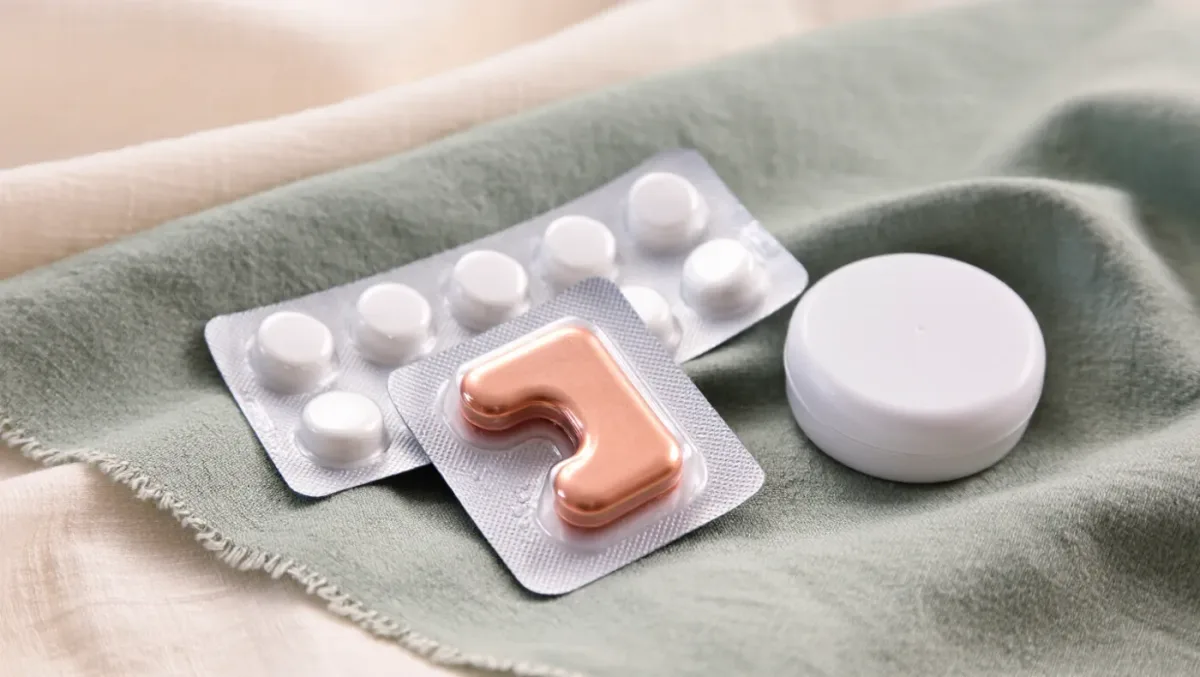
If you look beyond the pill, the most effective reversible methods available in the United States are the intrauterine devices (IUDs) and the contraceptive implant — long-acting methods with failure rates under 1 percent in typical use, per CDC effectiveness figures drawn from Trussell's widely cited 2011 analysis in the journal Contraception. For comparison, the pill and the ring fail in about 7 percent of typical-use users per year, mostly because of missed doses. Effectiveness differences between methods are, in practice, differences in how much each method asks of you.
It compares the documented options on effectiveness, effort, and reversibility, so you can bring specific questions to your own clinician. Which method fits depends on your health history, priorities, and plans — a decision ACOG's guidance reserves for you and your clinician together.
What do "typical use" and "perfect use" mean?
These two numbers explain most confusion in contraception comparisons. Perfect use is the failure rate when a method is used exactly as directed every time; typical use is the real-world rate, which folds in missed pills, late patches, and forgotten rings. Per the CDC's contraceptive effectiveness summary, based on Trussell's 2011 analysis: the pill has a perfect-use failure rate of 0.3 percent per year but a typical-use rate of 7 percent; male condoms go from 2 percent perfect use to 13 percent typical use. An IUD has essentially one number — there is no daily behavior to vary — which is why its typical and perfect use figures converge.
How do the main methods compare?
| Method | Typical-use failures per 100 users per year (CDC/Trussell 2011) | What it asks of you | Returns to fertility |
|---|---|---|---|
| Contraceptive implant | 0.05 | One insertion every 3 years, per FDA labeling | Within weeks of removal |
| Hormonal IUD | 0.1-0.4 | One insertion every 3-8 years, depending on device | Within weeks |
| Copper IUD | 0.8 | One insertion, up to 10 years; hormone-free | Within weeks |
| Female sterilization | 0.5 | A surgical procedure; intended permanent | Permanent |
| Injection (Depo) | 4 | A shot every 3 months | Can take months, per ACOG |
| Pill | 7 | Daily | Weeks to months |
| Patch / ring | 7 | Weekly / monthly | Weeks to months |
| Male condom | 13 | Every act of intercourse | Immediate |
| Withdrawal | 20 | Every act, precise timing | Immediate |
| Fertility-awareness methods | 2-23 depending on method and rigor | Daily tracking and discipline | Immediate |
Two categories the table compresses deserve expansion. Sterilization is permanent — vasectomy for a male partner (0.15 typical-use failure) and tubal procedures are intended as end-of-family-planning decisions, and per federal guidance (as of 2016 CMS rules) consent processes for tubal sterilization include waiting periods. Condoms hold a unique dual role: their typical-use failure rate is the highest in the reversible prescription-free tier, but they remain the only method that reduces transmission of sexually transmitted infections, per CDC guidance — many people use a highly effective method for pregnancy and condoms for infection protection.
Why do clinicians highlight IUDs and implants?
ACOG's 2017 practice bulletin and its guidance on long-acting reversible contraception describe IUDs and the implant as first-line options for most people, including those who have never been pregnant and adolescents, reversing older assumptions. The logic follows directly from the numbers above: methods that remove human error outperform methods that depend on it. The historical caution that IUDs were unsuitable for people who had not given birth was based on outdated device data; current guidance does not support it. Insertion involves cramping for many people, and clinics discuss pain management options — an area where a 2021-2022 body of research, summarized in reviews in Contraception and Obstetrics & Gynecology, found that standard pretreatment medications often provide less relief than hoped, so asking a clinic about its specific protocol is reasonable.
Do non-pill methods change fertility later?
No long-term effect is documented. Per ACOG guidance, fertility returns within weeks after stopping pills, removing an IUD, or removing an implant; the injection is the exception, where return of ovulation can take several months to a year after the last shot. This was long misunderstood: the modern evidence summarized in ACOG guidance found no association between prior contraceptive use and later difficulty conceiving. IUDs and implants are reversible by definition — removal is the reversal.
What about the over-the-counter pill?
In July 2023, the US Food and Drug Administration approved norgestrel (brand name Opill) as the first daily oral contraceptive available over the counter without a prescription in the United States — a jurisdiction-specific milestone that changes access, not effectiveness. It is a progestin-only pill, and per the FDA's 2023 announcement, its real-world protection still depends on taking it at the same time every day; progestin-only pills are less forgiving of delays than combined pills. Over-the-counter status removes the prescription barrier but not the adherence requirement.
How should the choice actually be made?
The CDC's Medical Eligibility Criteria — updated in its 2016 United States MEC and applied by clinicians since — grade each method's safety for specific health conditions, from migraine with aura to clotting history, and a clinician applies these categories in minutes once your history is known. Beyond safety, the useful questions are personal: How does this method's failure rate compare with how I would actually use it? What bleeding pattern am I prepared for — hormonal IUDs commonly lighten periods, while copper IUDs commonly make them heavier, per ACOG? How do I feel about a procedure versus a daily habit? None of these has a right answer; the fit is individual.
When to talk to a clinician
Schedule a contraceptive conversation, per the general direction of CDC and ACOG guidance, when starting or switching methods, when side effects are pushing you toward stopping — bleeding changes, headaches, mood effects all have alternatives — after any pregnancy, when a method may no longer suit your health (new clotting risk, new migraines with aura, new medications that interact, per the MEC framework), and urgently after unprotected sex if pregnancy is not wanted, because emergency contraception works within days, not weeks. If you are happy with your current method, that, too, is a legitimate clinical finding — stability counts.
Effectiveness rankings mostly measure memory and logistics, not virtue. The best method is the one whose demands match your actual life.
Frequently asked questions
Are IUDs safe if I have never been pregnant? Yes, per ACOG's guidance, which describes IUDs as first-line options for most people including those who have never given birth. Older concerns came from devices discontinued decades ago. Insertion cramping is real and worth discussing beforehand, including pain-management options, but nulliparity itself is not a safety barrier under current guidance.
Does the copper IUD affect hormones? No. The copper IUD works through copper's effect on sperm and eggs without hormones, per ACOG's patient guidance. Its most common trade-off is heavier, sometimes crampier periods, particularly in the first months. For people who want highly effective, hormone-free contraception for up to a decade, that trade-off is the main thing to weigh.
Can I switch methods midstream? Generally yes, and it is common. Per CDC and ACOG guidance, clinicians often overlap methods briefly — for example, starting a new hormonal method a week before an IUD removal — so protection never lapses. The CDC's selected-practice recommendations describe these transitions explicitly. Tell the clinician the plan; almost no transition requires a gap.
Do birth control methods protect against STIs? Only condoms and dental dams reduce STI transmission risk, per the CDC. No hormonal method, IUD, or implant affects infection risk at all. This is why the CDC describes dual protection — a highly effective pregnancy-prevention method plus condoms — for people whose infection risk is not zero, including anyone with a new or multiple partners.
Is withdrawal a legitimate method? It is a documented method, with honest limits: per CDC figures from Trussell's analysis, about 20 in 100 typical users conceive per year, compared with under 1 for IUDs and implants. Some couples use it as a backup or alongside fertility awareness. It is also completely free and immediately reversible. What it is not is highly effective — the typical-use number is the relevant one for planning.