There are six main approaches to uterine fibroids, ranging from monitoring without treatment to hysterectomy, and which one makes sense depends mostly on three questions: whether symptoms interfere with your life, whether you want to become pregnant in the future, and how close you are to menopause, when fibroids typically shrink. Uterine fibroids are extremely common — per the NIH's Eunice Kennedy Shriver National Institute of Child Health and Human Development (NICHD), by age 50 as many as 70 to 80 percent of women have had them, with Black women affected earlier and more often.
It compares the documented options and what each involves, as a foundation for a conversation with your own clinician. No option is recommended from this site, and no outcome for any individual can be promised.
What are uterine fibroids?
Uterine fibroids are noncancerous growths of the muscle tissue of the uterus, also called leiomyomas. They vary from too small to see to large enough to distort the abdomen, and a person may have one or many. Per NICHD, the exact cause is unknown, but hormones appear to support their growth, which is why they often shrink after menopause. Genetic factors contribute, and having a close relative with fibroids raises the likelihood.
Many fibroids cause no symptoms at all and are found incidentally on an exam or scan. When symptoms do occur, the most common are heavy or prolonged menstrual bleeding, pelvic pressure or pain, frequent urination, and, in some cases, difficulty with fertility or pregnancy complications, per ACOG's patient guidance on fibroids.
How do the treatment options compare?
The table below summarizes the approaches described in ACOG and NICHD guidance. It is a map of options, not a recommendation.
| Option | What it involves | Pregnancy afterward | Key considerations |
|---|---|---|---|
| Watchful waiting | Monitoring symptoms and fibroid size at intervals, no active treatment | Not applicable | Standard for fibroids without bothersome symptoms; growth is monitored over time |
| Medications | Iron for bleeding-related anemia; hormonal options such as the levonorgestrel IUS; nonhormonal tranexamic acid during periods; GnRH-based medications that shrink fibroids temporarily | Contraception or pre-conception planning applies; not treatments used during pregnancy | Symptom control rather than removal; effects depend on continued use; per FDA approval in 2021, combination GnRH-antagonist regimens are approved for heavy bleeding from fibroids in premenopausal adults |
| Uterine artery embolization | An interventional radiologist blocks the blood supply to fibroids via a catheter through a small wrist or groin puncture | Effects on future pregnancy are not settled; not generally advised for those planning pregnancy, per ACOG | Minimally invasive, treats all fibroids at once; recovery typically shorter than surgery, per ACOG patient guidance |
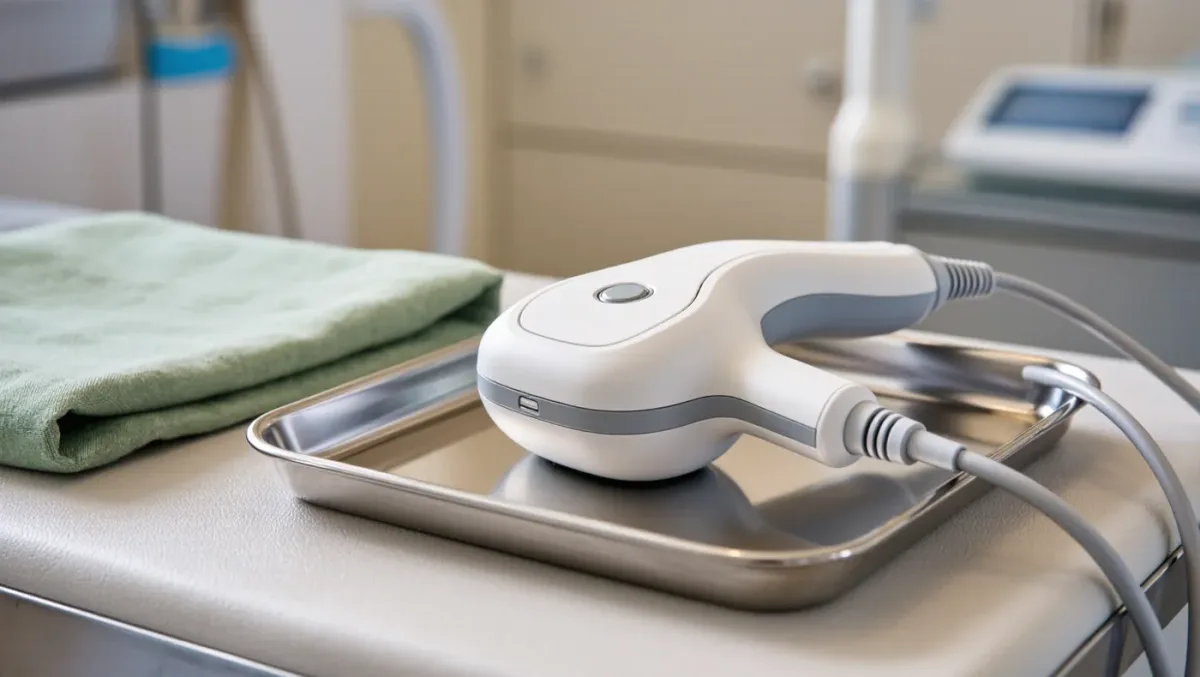
| MRI-guided focused ultrasound | High-intensity ultrasound waves, guided by MRI, heat and shrink fibroid tissue through the skin | Evidence on later pregnancy is limited | Non-invasive; suitability depends on fibroid number, size, and location; availability varies by center |
| Myomectomy | Surgical removal of fibroids while keeping the uterus; done hysteroscopically, laparoscopically, or through an abdominal incision depending on size and position | Often chosen specifically to preserve or improve fertility chances, per ACOG; cesarean delivery is sometimes recommended afterward depending on the incision | Fibroids can recur; risks include bleeding, like any surgery |
| Hysterectomy | Surgical removal of the uterus; definitive treatment that ends bleeding and prevents recurrence | Pregnancy is no longer possible afterward | Major surgery; typically reserved for symptoms not controlled by other options or when childbearing is complete, per ACOG |
Does every fibroid need treatment?
No. ACOG's guidance is explicit that fibroids without symptoms generally require no treatment beyond monitoring. Because fibroids are hormone-responsive and tend to shrink after menopause, many people who reach that stage without severe symptoms never need an intervention. Imaging follow-up and a clear record of symptoms — how many days of bleeding, how often pads or tampons are changed, whether activities are limited — give you and your clinician real data for the decision.
Do fibroids cause infertility?
Sometimes, depending on location and size, but not automatically. The American Society for Reproductive Medicine notes that fibroids that distort the uterine cavity are the type most clearly associated with reduced fertility, while fibroids confined to the muscular wall often matter less. Submucosal fibroids — those growing into the uterine cavity — are the category where removal has the clearest documented association with improved fertility outcomes in ASRM's literature review (2021). This is population-level evidence, not a prediction for any individual.
What about disparities in fibroid care?
NIH-funded research summarized by NICHD documents that Black women develop fibroids at higher rates, at younger ages, and with more severe symptoms. A 2010 study funded by the NIH and published in the American Journal of Obstetrics and Gynecology (the LIFE study) followed a large cohort and found cumulative incidence by age 50 of about 80 percent among Black women versus nearly 70 percent among white women. Disparities also appear in treatment, where research has reported higher hysterectomy rates and longer delays before surgery among Black patients. These are reasons to ask about the full option list, not a reason for alarm.
How do you and a clinician choose?
The decision typically weighs the severity of symptoms, the results of imaging such as ultrasound, the number, size, and location of fibroids, pregnancy goals, age, and prior treatments, per ACOG guidance. Useful questions to bring: Which options fit my fibroids' location? What does the evidence say about this option and future pregnancy? What happens if we wait? What is the recovery like? If a single option is presented without alternatives, asking for the reasoning — or a second opinion — is reasonable.
When to talk to a clinician
Schedule an evaluation, per the general direction of ACOG guidance, if periods are heavy enough to soak through protection hourly, last longer than a week, or come with symptoms of anemia such as fatigue and lightheadedness; if pelvic pressure or pain is persistent; if you have difficulty conceiving after a year of trying, or six months at 35 or older; or if bleeding occurs between periods or after menopause — bleeding after menopause always warrants prompt evaluation.
Most people with fibroids never need surgery. The option list is long, and the starting point is usually a conversation, not an operating room.
Frequently asked questions
Can fibroids turn into cancer? The overwhelming majority do not. Fibroids are benign, and per NICHD, the rare cancer of the uterine muscle called leiomyosarcoma is thought to occur far more often independently than as a transformation of a known fibroid. Rapidly growing fibroids or new bleeding after menopause deserve prompt evaluation, which is why monitoring and reporting changes matter.
Will fibroids shrink on their own? Typically after menopause, when estrogen and progesterone decline, per NICHD. During the reproductive years, they tend to persist or slowly grow. GnRH-based medications can shrink them temporarily, but per ACOG guidance the shrinkage reverses after the medication stops, which is why those drugs are usually used for limited periods or around surgery.
Does diet affect fibroids? Evidence is limited and no diet is established to shrink or prevent fibroids. Some observational research, summarized in reviews cited by NIH programs, has explored links between diet patterns, vitamin D status, and fibroid risk, but the findings are preliminary and inconsistent. Treatments with demonstrated effects are those in the comparison table above, discussed with a clinician.
Can fibroids come back after myomectomy? Yes. Recurrence after myomectomy is documented in follow-up studies summarized by ACOG, with rates rising over the years after surgery; a 2017 review in Fertility and Sterility reported meaningful proportions of patients requiring further treatment within five years. Recurrence risk is one of the factors weighed against other options during treatment planning, especially near menopause.
Is uterine artery embolization safe for future fertility? The honest answer is that the evidence is unsettled. Per ACOG's patient guidance, embolization is not generally advised for people planning future pregnancy, and pregnancies after embolization do occur, with data on outcomes still limited compared with myomectomy. If fertility preservation matters to you, say so explicitly — it should change which options are on the table.