
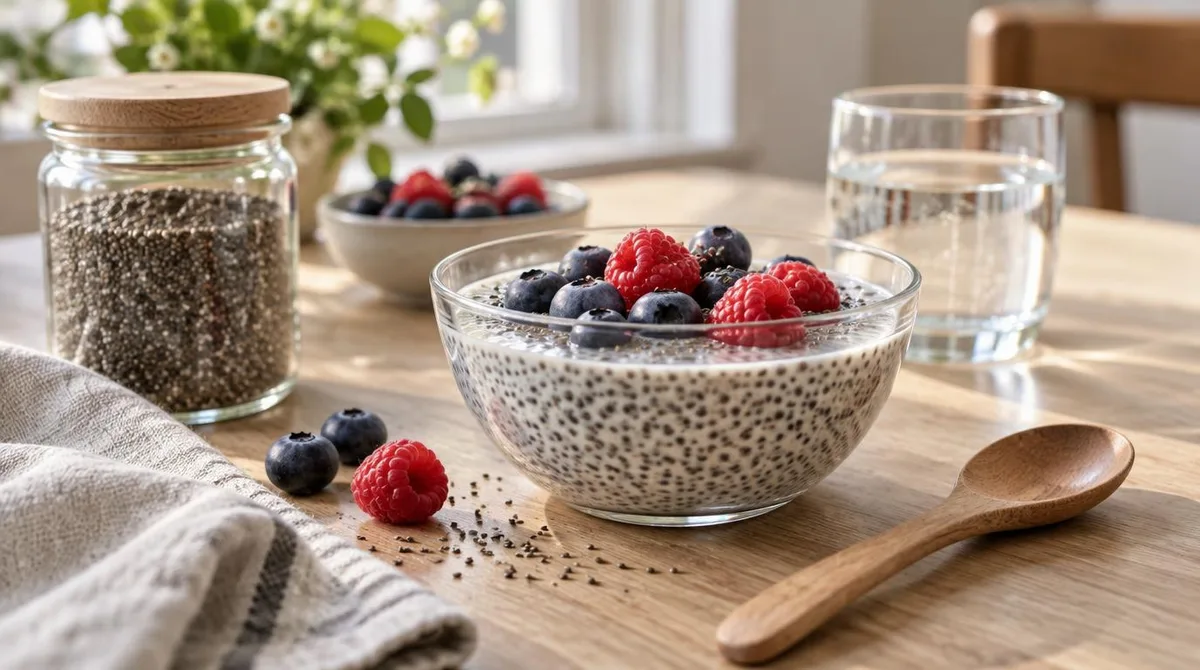
Chia seeds are tiny black seeds that pack fiber, plant protein, and omega-3 fats into a small serving. Most people can eat 1-2 tablespoons a day to support digestion, fullness, and everyday nutrition.
They are cheap, easy to add to meals, and safe for most healthy adults. A few groups — people on blood thinners and anyone with swallowing problems — need simple precautions explained below.
What Are Chia Seeds?
Chia comes from Salvia hispanica, a flowering plant in the mint family. The seeds were a staple food of the Aztecs and Mayans, who valued them for energy and stamina. The Maya word "chia" is often translated as "strength."
According to Wikipedia, the seeds are cultivated on a small scale in their ancestral homeland of central Mexico and Guatemala, and commercially throughout Central and South America; in the 21st century they are grown and consumed commercially in Mexico, Guatemala, Bolivia, Argentina, Ecuador, Nicaragua, Australia, the United Kingdom, and the United States. They are tiny, oval, and gray-black or white, with a mild, nutty taste. Their best-known trick is absorbing liquid. Soaked seeds swell into a soft gel that can hold many times their weight in water.
Quick facts:
- Size: about 1 millimeter, oval
- Color: black, gray, brown, or white (nutrition is similar)
- Taste: mild and nutty; they take on the flavor of the liquid around them
- Texture: soft gel when soaked, slightly crunchy when dry
- Shelf life: up to about two years in a sealed bag or jar
Chia Seed Nutrition: What One Serving Gives You
A standard serving is 2 tablespoons (about 1 ounce, or 28 grams). Here is roughly what that serving provides:
- Calories: about 140
- Fiber: about 10 grams — roughly one third of the 22-34 grams of fiber most adults need per day
- Protein: about 4-5 grams of complete plant protein
- Omega-3 fat (ALA): about 5 grams
- Calcium: about 180 milligrams
- Magnesium and phosphorus: useful amounts for bone support
The omega-3 in chia is ALA (alpha-linolenic acid), the plant form. Your body converts only a small part of ALA into the marine omega-3s (EPA and DHA) found in fish. So chia is a helpful addition to an omega-3-rich pattern, not a full replacement for fatty fish.
Most of the carbohydrate in chia is fiber, so the net carb count is low. That is one reason the seeds fit well into many eating styles.
Health Benefits of Chia Seeds
No single food changes your health on its own. But chia earns its reputation as a dense little nutrient package. Here is what the seeds can realistically do for you. We covered a connected angle in Caffeine and Women's Health: Doses, Pregnancy, Bones, and Sleep. We covered a connected angle in Caffeine and Women's Health: Doses, Pregnancy, Bones, and Sleep.
1. Supports Digestion and Regularity
Chia is about 35-40 percent fiber by weight. Most of it is soluble fiber, which absorbs water, softens stool, and feeds friendly gut bacteria. People who add chia gradually often notice more regular bowel movements and less straining.
2. Helps You Feel Full
The soluble fiber turns to gel in your stomach. That gel slows digestion and keeps you satisfied longer. In plain terms: a small chia snack can stop the "hungry again in one hour" cycle.
3. Adds Plant Omega-3s (ALA)
ALA omega-3 fats are part of a heart-friendly eating pattern. Chia is one of the richest plant sources of omega-3, which makes it popular with vegetarians and anyone who eats little fish. For related coverage, see Alcohol Guidelines for Women, Explained: One Drink, Cancer, and the Heart. For related coverage, see Alcohol Guidelines for Women, Explained: One Drink, Cancer, and the Heart.
4. Supplies Complete Plant Protein
Chia contains all nine essential amino acids. Two tablespoons add a quiet 4-5 grams of protein to breakfast, smoothies, or yogurt without much effort.
5. Softens Blood Sugar Swings
Because chia gel slows how fast food leaves the stomach, it can blunt the rise in blood sugar after meals. This is a food-level effect, not a diabetes treatment, but it is a nice bonus for a topper on oatmeal or toast.
6. Supports Bones and Teeth
Calcium, phosphorus, and magnesium in chia all play roles in bone health. The seeds are not a dairy replacement on their own, but they add to your daily mineral total.
7. Brings Antioxidants
Chia contains natural antioxidant compounds that help protect its fragile oils from going rancid. Those same compounds add to the antioxidant mix of your diet.
How Much Chia Should You Eat Per Day?
The sweet spot for most adults is 1-2 tablespoons (10-20 grams) per day. That is enough to get the fiber and omega-3 benefits without overloading your gut.
If chia is new to you:
- Start with 1 teaspoon a day for the first few days.
- Move to 1 tablespoon for a week.
- Then settle at 1-2 tablespoons daily if it agrees with you.
- Drink water through the day — fiber needs fluid to work well.
Jumping straight to large servings is the most common mistake. A sudden fiber jump causes gas and bloating, and sometimes loose stools. Slow and steady wins.
Soaked or Dry? The Right Way to Eat Chia
You can eat chia dry or soaked. Soaking is the safer and more comfortable option for most people.
Why Soaking Wins
Soaked seeds are already swollen and soft, so they slide through the throat and stomach easily. The gel texture also makes chia pleasant to eat — closer to tapioca than to sand.
Basic soaking method:
- Stir 1 tablespoon of chia into about half a cup of water, milk, or juice.
- Wait 5 minutes, then stir again to break up clumps.
- Let it sit 15-30 minutes at room temperature, or overnight in the fridge.
- Eat it as is, or fold it into yogurt, oatmeal, or a smoothie bowl.
Eating Chia Dry: The Risk You Should Know
Dry chia is fine sprinkled in small amounts over moist foods — think oatmeal, yogurt, or soup. The rule is simple: never eat spoonfuls of dry seeds without fluid.
Here is why. Dry seeds absorb water and can swell to about ten times their starting weight. If you swallow a dry tablespoon and chase it with too little liquid, the seeds can clump and swell in the esophagus (the food pipe). Doctors have described cases where this caused a painful blockage that needed urgent treatment.
The people at highest risk are those with swallowing disorders or a narrowed esophagus. For them, dry chia is off the table; fully soaked gel is the only safe form.
For everyone else, the habit is easy: sprinkle, then drink a full glass of water with or right after the meal.
How to Take Chia Seeds Every Day
There is no magic hour for chia. The best time is the time you will actually remember.
Popular options:
- Morning: stirred into breakfast with a glass of water nearby — the most common routine
- Before meals: about 20-30 minutes ahead, as a small pudding, to take the edge off your appetite
- As a snack: chia pudding or a chia drink between meals
- Evening: mixed into a light yogurt bowl; nothing in chia keeps you awake
Heat is the one thing to manage. Chia handles gentle cooking well, but high, long heat damages the delicate omega-3 oils. Add seeds after cooking when you can. Baking at moderate oven settings (up to about 350°F / 180°C) is fine — think muffins, pancakes, and granola bars.
Easy Chia Recipes to Start With
These take minutes and use pantry basics.
Basic Chia Pudding
- Mix 3 tablespoons chia with 1 cup of milk (dairy or plant).
- Add a teaspoon of honey or maple syrup if you like.
- Stir, wait 10 minutes, stir again.
- Refrigerate overnight (or at least 3-4 hours).
- Top with berries, banana, nuts, or granola.
Overnight Chia Oats
- ⅓ cup rolled oats
- 1 tablespoon chia
- ¾ cup milk
- A pinch of cinnamon and a splash of vanilla
Stir, refrigerate overnight, and add fruit in the morning.
Chia Smoothie Booster
- Blend 1 banana, a handful of frozen berries, and 1 cup of milk.
- Add 1 tablespoon chia and blend again.
- Drink within 10-15 minutes, before the seeds fully gel the drink.
Chia Lemon Drink
- Stir 1 tablespoon chia into a large glass of water.
- Add lemon juice and let sit 15 minutes.
- Stir and drink with a spoon or straw.
Yogurt and Chia Bowl
- ¾ cup plain yogurt
- 1 tablespoon chia
- Sliced fruit and a drizzle of honey
- Rest 10 minutes so the seeds soften
Egg Substitute for Baking
- Grind 1 tablespoon chia into a meal.
- Whisk with 3 tablespoons water.
- Rest 10-15 minutes until gelled.
- Use in place of one egg in pancakes, muffins, or quick breads.
Kitchen Thickener and Topper
- Stir a spoonful into soups or stews after cooking to thicken
- Sprinkle over salads, grain bowls, or cottage cheese
- Fold into pancake or muffin batter for extra fiber
Chia Seeds and Weight Loss: The Honest Answer
Chia does not burn fat, and no food does. But it can make a sensible eating plan easier to follow.
The realistic chain looks like this:
- The fiber and protein combo increases fullness after eating.
- You feel less urge to snack between meals.
- Over weeks, that can help you eat a little less overall.
Soaked chia adds volume to food for very few calories, which is why chia pudding is a staple in many weight-management kitchens. Pair it with regular movement and balanced meals, and the seeds play a supporting role — not the lead.
One caution: chia is dense in calories for its size. Two tablespoons of pudding toppings plus extra nuts and honey can quietly add up. Measure servings instead of pouring freely.
Who Should Be Careful with Chia Seeds
Most people tolerate chia well. A few groups need a pause and a conversation first.
- People on blood thinners: omega-3 fats in large routine amounts can affect clotting. Check with your doctor before making chia a daily habit.
- People with swallowing disorders or a narrowed esophagus: avoid dry seeds entirely; use only fully soaked gel, and start small.
- Anyone allergic to seeds or nuts: chia allergy is rare but real. Reactions can include itching, hives, or swelling. Start with a tiny amount the first time.
- Sensitive guts (IBS, flares of IBD): introduce slowly, a teaspoon at a time, and watch for bloating.
- Pregnant and breastfeeding women: chia is generally considered a useful food in pregnancy thanks to fiber, minerals, and omega-3s, but ask a doctor first, as with any diet change.
- Young children: whole dry seeds can be a choking risk; soaked chia stirred into porridge or pudding is the safer form once a child handles solids well.
Possible Side Effects
Common, mild, and dose-related:
- Bloating and gas — usually from ramping up fiber too fast
- Loose stools — from unusually large servings
- Feeling overly full — the gel is filling by design
Less common:
- Allergic reactions — itching, hives, swelling of lips or tongue
- Esophageal irritation or blockage — almost always linked to eating dry seeds without enough water
If you notice a pattern of discomfort, drop back to a teaspoon a day and build up more slowly. Most side effects fade as your gut adapts.
How to Buy and Store Chia Seeds
Quality clues when shopping:
- Look: clean, dry, uniform seeds without clumps, dust, or broken bits
- Packaging: airtight bags or jars; chia absorbs moisture and smells easily
- Smell: neutral or faintly nutty; a paint-like odor means rancid oils — toss it
- Type: black and white seeds are nutritionally equal; skip blends with added sugar
At home, keep the seeds in a sealed jar in a cool, dark cupboard. Properly stored, they keep their quality for up to two years. Ground chia loses freshness faster, so grind only what you need, when you need it.
When to See a Doctor
Get emergency care (call 911) if:
- You have trouble breathing, throat tightness, or dizziness after eating chia
- Food feels stuck in your chest and will not pass, with heavy drooling or inability to swallow — possible blockage from dry seeds
- Your face, lips, or tongue swell quickly
See a doctor the same day if:
- You develop hives, spreading itch, or swelling that grows but does not impair breathing
- You have repeated vomiting or severe belly pain after eating chia
- You feel food sticking when you swallow, even mildly
Plan a routine visit if:
- You take warfarin or other blood thinners and want to use chia daily
- You are pregnant or breastfeeding and unsure about serving sizes
- You have a chronic digestive condition and want help adding fiber comfortably
How many chia seeds should I eat per day?
Most adults do well with 1-2 tablespoons (10-20 grams) a day. Start with a teaspoon and increase over a week to let your gut adjust. More than that rarely adds benefit and often adds bloating.
Do chia seeds need to be soaked before eating?
No, but soaking is safer and gentler on digestion. Soak 15-30 minutes in water, milk, or yogurt until a gel forms. Dry seeds are acceptable in small amounts sprinkled on moist food with a glass of water alongside.
What happens if I eat chia seeds without water?
Dry seeds swell as they absorb liquid. Without enough water, they can clump and, in rare cases, block the esophagus. Always drink a full glass of water with dry chia, or soak the seeds first.
Is it better to eat chia seeds in the morning or at night?
Both work, so pick the time you will remember. Morning with breakfast is popular and helps with steady energy. Evening in a yogurt bowl is equally fine — nothing in chia disturbs sleep.
Can chia seeds help with weight loss?
They can help indirectly. Fiber and protein increase fullness, which may reduce snacking, and soaked chia adds food volume for few calories. There is no fat-burning effect; results still depend on your overall eating pattern and activity.
Conclusion
Chia seeds are a simple, low-effort upgrade to an everyday diet. One to two tablespoons a day deliver meaningful fiber, plant protein, and ALA omega-3s, plus minerals that support digestion, fullness, and overall nutrition. Soak the seeds when you can, drink water when you eat them dry, and build your serving size up slowly to avoid bloating. Keep them in a sealed jar and add them to puddings, oats, smoothies, or baking. Most people tolerate chia beautifully, while those on blood thinners or with swallowing problems should follow the precautions above. Small seed, small habit, steady payoff.